Signs of Survival
The first 50-degree day of the season always brings a welcome buzz back to the apiary. After a long stretch of winter, the hives suddenly come alive as bees whiz out of their entrances and fill the air. To someone passing by, it might look chaotic—but for beekeepers, it’s a reassuring sign that the colony made it through the cold months.
What the bees are doing on these warm days are called cleansing flights—and yes, it’s exactly what it sounds like.
Honey bees are remarkably hygienic insects. During the winter, when temperatures are too cold to fly, they stay clustered inside the hive to keep warm. Rather than relieving themselves inside their home (which could spread disease and contaminate their food), they simply hold it in—sometimes for months. As soon as the temperature rises enough for safe flight, the bees head outside for a quick trip to take care of business.
The result is a flurry of activity around the hive, and sometimes a few unfortunate yellow specks on anything nearby.
Because of this, beekeepers know not to park cars too close to the hives or hang laundry outside on those first warm days. If you’re standing nearby, you might even get caught in what could politely be described as a “bee confetti” shower.
Despite the mess, these days are something most beekeepers celebrate. After the quiet stillness of winter, the sight of thousands of bees flying again is one of the first signs that spring is on its way—and that the colony survived to see another season.
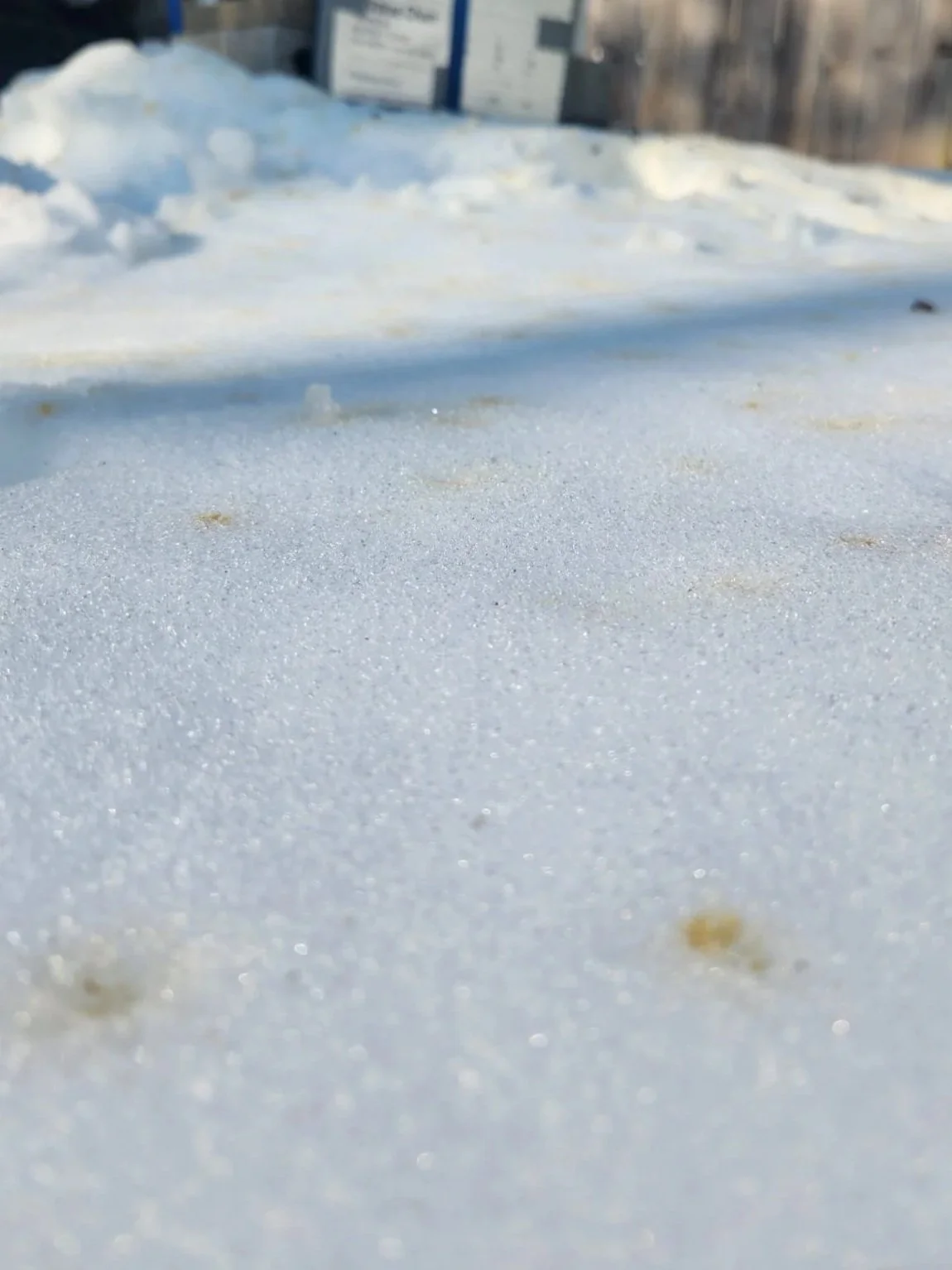
Signs of cleansing on a winter day (photo: Feb 14, 2026)
